



Hope has always made power uncomfortable.
Not performative hope.
Not slogans or speeches.
The embodied kind.
The kind that lives in the nervous system before it becomes an idea.
That’s what the Ghost Dance was and that’s why it was destroyed.
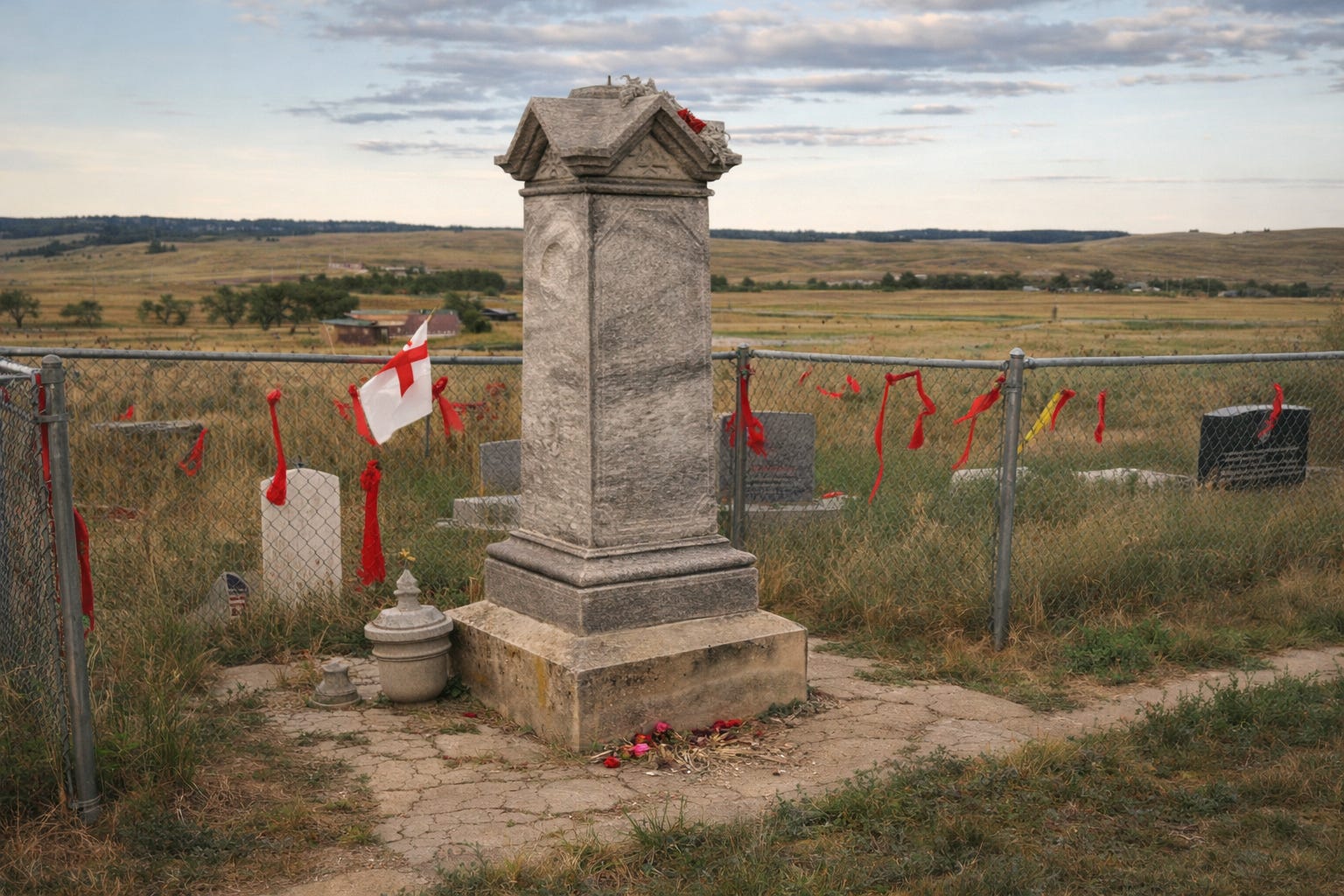
In December of 1890, the United States Army surrounded a group of Lakota people at Wounded Knee Creek in South Dakota.
What followed was not a battle. It was a massacre.
More than 250 Lakota were killed.
Most were women, children, and elderly people.
Many were unarmed.
Some were shot while fleeing; many bodies were later found frozen in positions of escape.
Others were killed by artillery fire meant for warfare, not civilians.
This happened during an attempt to disarm them.
The Lakota were not preparing for violence.
They were practicing the Ghost Dance, a spiritual ceremony rooted in grief, renewal, and the belief that suffering was not the end of the story.
The dance taught that ancestors were still present.
That the earth could heal.
That a new world could emerge without bloodshed.
Movement was the prayer.
People gathered in circles. They sang. They danced. They mourned together.
After decades of starvation, broken treaties, stolen children, and cultural erasure, the Ghost Dance was a way to metabolize devastation when nothing else remained.
To the U.S. government and military, this terrified them.
Large gatherings of Native people were viewed as dangerous. Indigenous spirituality was treated as rebellion. Even the belief (symbolic, not militaristic)that ceremonial clothing held spiritual protection was interpreted as a threat.
Hope outside state control was unacceptable.
So the Army opened fire.
Twenty Medals of Honor were later awarded to U.S. soldiers for their actions that day. To this day, Native communities continue to call for those medals to be rescinded.
That detail matters.
Because this wasn’t a misunderstanding.
It wasn’t chaos.
It was power responding violently to something it could not regulate.
As I sat with this history, something personal surfaced for me.
I was raised in a culture where dancing—just dancing—was discouraged.
Not ritual dancing. Not religious dancing. Dancing for joy.
Music, movement, laughter, bodies syncing together in ways that felt alive.
It wasn’t framed as spiritual. It was framed as inappropriate. Disrespectful. Excessive. Something to be controlled.
At the time, I didn’t have language for why that restriction felt wrong.
I only knew that dancing made me happy and that happiness, strangely, seemed suspicious.
Now I wonder if there were layers to that fear.
Happy people are harder to control than scared ones.
Regulated bodies are harder to dominate than dysregulated ones.
Communities that move and grieve together don’t fracture as easily.
Across history, the pattern repeats.
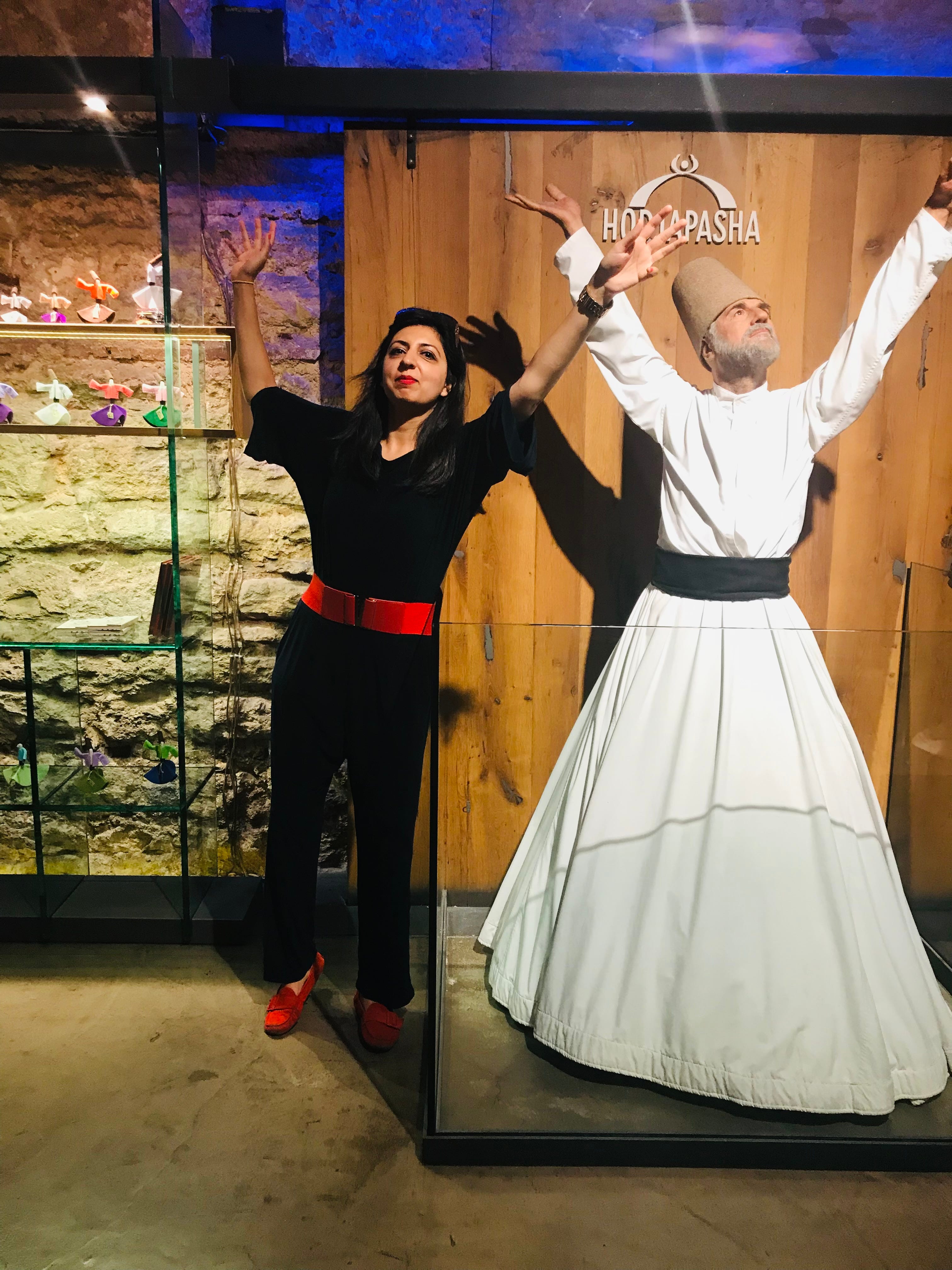
Certain Sufi Muslim orders spin in circles to experience divine union.
This is done as devotion, not entertainment.
The body moving until the ego loosens its grip and something larger takes over. For centuries, these mystics have been persecuted—often by other Muslims—for practicing what was labeled dangerous or heretical.
Not because the practice was violent.
Because it bypassed authority.
One of the most famous examples is Mansur al-Hallaj, a Sufi executed in 922 CE for declaring “I am the Truth.”
Mystically, it meant the self had dissolved into God.
Politically and religiously, it was heard as an unforgivable collapse of hierarchy.
A human speaking from inside the divine, without permission.
When people access meaning directly—through movement, ritual, trance, or inner experience—they no longer need intermediaries.
No institution to approve the connection.
No hierarchy to interpret God on their behalf.
That kind of access has always been threatening.
The Salem witch trials weren’t about witches.
Banned ceremonies weren’t about safety.
Wounded Knee wasn’t about keeping the peace.
They were about control.
Spiritual and mystical practices are feared when they restore agency to the individual and coherence to the group.
When grief is processed collectively instead of suppressed.
When bodies move instead of freeze.
When joy circulates instead of obedience.
The Ghost Dance was dangerous because it offered hope without permission.
And that is the one thing power has never known how to tolerate.
What makes this history especially tragic is not only the massacre, but what followed.
Ceremony driven underground.
Movement associated with danger.
Silence replacing song.
Bodies learning, over generations, that expression equals risk.
That kind of trauma doesn’t end in one place or one year.
It echoes. In depression. In addiction. In disconnection. In the quiet belief that joy is unsafe.
And yet this is where I return to hope.
Something ancient is re-emerging.
People are going inward again.
Not abstractly, but physically. Through movement. Breath. Meditation. Dance. Somatic healing. Quiet rituals done without permission or performance.
More people are choosing direct experience over inherited fear.
Inner authority over borrowed belief.
Embodiment over suppression.
This isn’t about rejecting religion.
It’s about remembering that God was never confined to control structures.
History shows us that you can interrupt a movement.
You can suppress a ritual.
You can massacre a people.
But you cannot permanently erase humanity’s instinct to move toward meaning, coherence, and joy.
The dance always returns.
And this time, more people are listening to their bodies when it does.
This had me thinking about the Vibrational Energy Chart and how the faster energy moves, the higher the frequency gets.
So I'd be curious - do you think that dance is a physical way to raise our frequency?